
AI Isn’t the Risk. How You’re Using It Is.
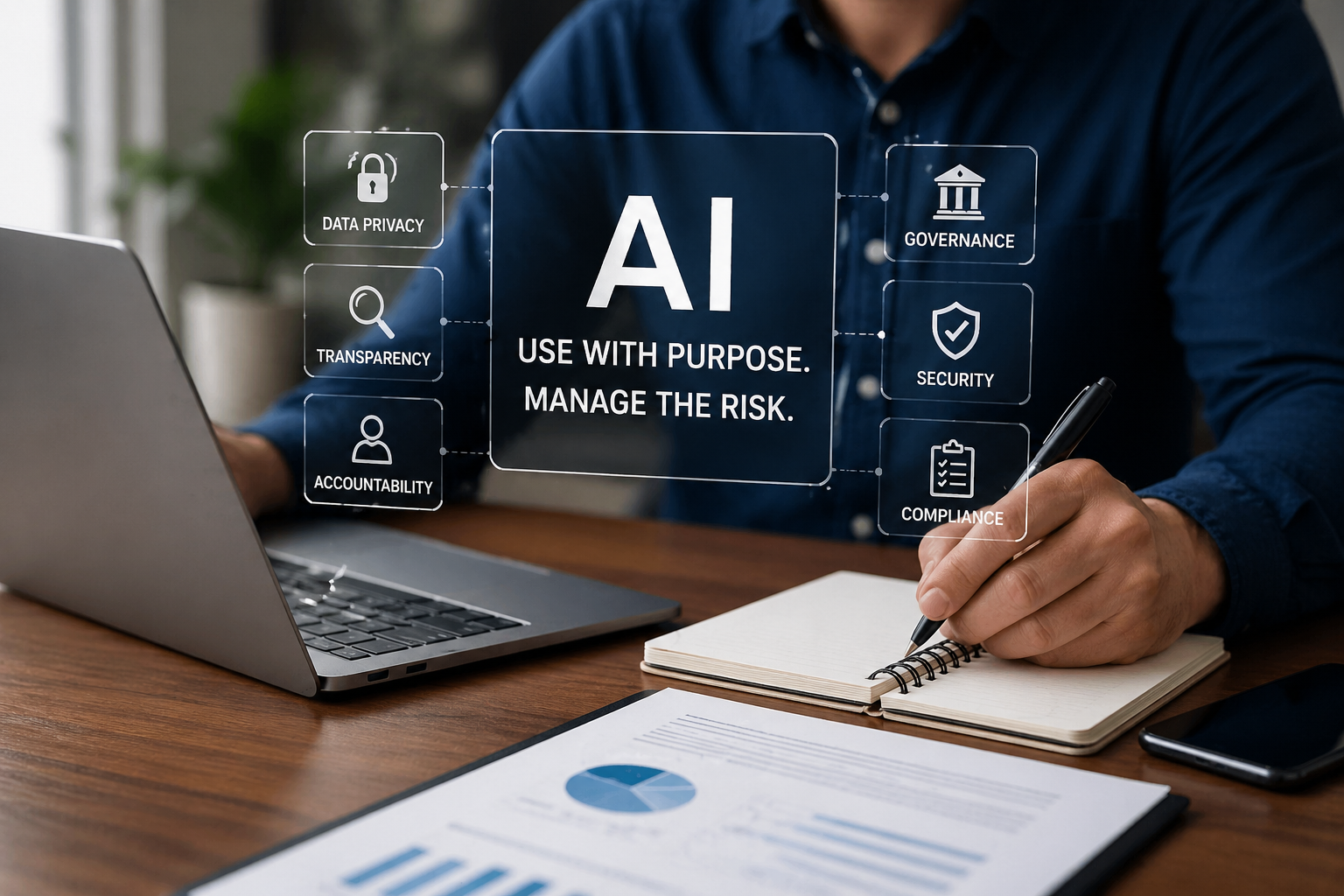
Most business owners are asking the wrong question about AI. It’s not “Should we be using it?”… it’s “Where is it already being used, and do I actually understand the risk?” Because AI isn’t being rolled out formally in most organizations. It’s showing up in day-to-day work — employees drafting emails, summarizing reports, or uploading internal information into tools without clear oversight. The issue isn’t the technology itself. It’s the gap between what leadership thinks is happening and what’s actually happening. That’s where risk builds quietly.
The exposure usually comes down to three things: data being shared without context, decisions being influenced without accountability, and no clear boundaries around acceptable use. Most organizations assume they’d know if something was wrong — but that’s not how this plays out. Problems show up later, in audits, client concerns, or decisions no one can fully explain. You don’t need a complex AI policy to fix this. You need visibility, simple boundaries, and clear ownership. Because AI won’t be the problem, but the lack of control around how it’s being used will.
If you’re already using AI in your business… and you probably are, whether it’s formal or not — the risk isn’t coming from the tool itself. It’s coming from the gaps around it. The fastest way to get ahead of it isn’t a complex policy or a full overhaul. It’s a clear look at where it’s showing up, how it’s being used, and where things aren’t lining up. That’s where issues start, and it’s also where they’re easiest to fix — before they turn into something you have to explain later.
![Strengthening Risk Hygiene in the Face of New and Emerging Threats [RIMS Magazine]](https://images.squarespace-cdn.com/content/v1/6999c41e453c476cc83df5b2/1777486499402-C1480TWPUVCS5B6918AW/636d46ec-dbed-4773-b1ce-245e514e4b09.png)
Strengthening Risk Hygiene in the Face of New and Emerging Threats [RIMS Magazine]
It All Begins Here

2026 RIMS Magazine
As organizations, both large and small continue to navigate complex risks and situations within their own respective industry.. one thing remains the same: our focus is on cyber threats and Artificial Intelligence!
Check out my article published in RIMS Magazine: Strengthening Risk Hygiene in the Face of New and Emerging Threats (2026) to help your business refocus and prevent exposure in the future.